Your cart is currently empty!
Category: Photography
-
The Invisible Light: Infrared & Ultraviolet Photography
To understand these techniques & use them successfully, we need first to understand the light spectrum. The colors the naked human eye normally sees, which range from violet to deep red, form a small part of it; they occupy light wavelengths ranging from around 380 nanometers (nm) to 750 nm. Wavelengths which are shorter become Ultraviolet and those which are longer become Infrared. All the photos that we have taken so far in our capacity as amateur or professional photographers, from when the camera was first invented (1816) up to recent days, have utilized that small part of the light spectrum. From black and white images (1826) the move to color photography (1861) was hailed as a great improvement, which indeed it was. But nowadays, creativity has moved far beyond that and modern technology is opening ever wider doors into realms undreamed of before. When technology weds art, the result becomes utterly fantastic and even unearthly! This is what Infrared (IR) and Ultraviolet (UV) photography is all about. It allows photographers to capture what the naked eye cannot see and what ordinary cameras are not designed to capture. In fact, cameras are normally fitted with filters to screen off those wavelengths.

This brings us to what you need in order to get the results you seek to achieve with Infrared and/or Ultraviolet photography. Short of buying a new camera, one easy & inexpensive solution is to acquire a filter to place in front of the lens of the camera you already have. After experimenting with it and once you are convinced that this is the way forward for you, you can have your camera converted to the technique you desire. It will cost you but will still be less expensive than an outright new camera. The only snag is once converted there is no way back; your camera cannot revert to its old practices.

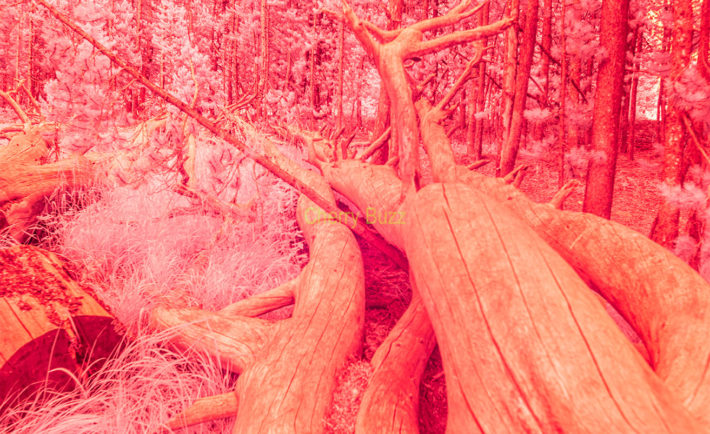
Infrared photography began in the early years of the 20th century and proved very useful during WWI and later in WWII as well. But it was the introduction of digital cameras in the late 1990s that weighed decisively in favor of these modern techniques. Infrared photos are easily recognizable by their eerie and otherworldly glowing whites and jet-black contrasts or by their strange colors. Because it reveals what the eye normally cannot see and in quite strong contrasts, infrared photography has proved itself extremely useful in forensic investigations. In the film industry, it is responsible for numerous surreal or otherworldly effects. When IR photography is used, almost everything looks extremely different from what it looks like within the visible light spectrum and, in short, this is what constitutes its magic. One good piece of advice, however, is to remember always that living entities, trees, foliage or a butterfly, reflect a greater amount of infrared light than inanimate objects such as concrete walls or mountains.

Ultraviolet photography uses light from the Ultraviolet (UV) spectrum only. “There are two ways to use UV radiation to take photographs – reflected ultraviolet and ultraviolet induced fluorescence photography.” The first is most useful in medicine, especially dermatology, in botany and in forensic investigation etc. The sun is the source here, a natural source which is readily available, except on cloudy or rainy days. But UV induced fluorescence photography must take place in a darkened room. In this case, it is not enough to use a filter, as in infrared photography. The camera must be modified, and UV capable lenses must be fitted.

Ultraviolet photography gives fascinating results especially with flowers and insects. It reveals in flowers, for instance, patterns hidden from the human eye but seen only by insects who are being attracted as pollinators. This is like opening new doors of perception, allowing us, humans, to experience the world around us in ways never explored before. It allows us literally to have a bird’s or an insect’s eye view of the world around us.

Using this technique, some photographers have certainly produced photos that are stunningly beautiful thereby transforming ordinary blooms into things out of this world. One such photographer is Craig Burrows who lives and practices in Southern California. According to Craig, flowers, plants and leaves are all naturally fluorescing when exposed to sunlight, but the naked eye cannot see that because of the intensity of the reflected visible light. In other words, ultraviolet photography is giving us a truer view of the flowers than our eyes can give us. Truth, trick or art, whichever way you look upon it, the results are breathtakingly beautiful even without any photo processing as switching color channels.

For more information, please see the following links:
https://www.amateurphotographer.co.uk/technique/camera_skills
article by Alex Morrison at https://digital-photography-school.com/how-to-do-surreal-digital
Using Ultraviolet Light to Make Nature Fluorescence in Photos by Don Komarechka in https://petapixel.com/2017/09/21/using-ultraviolet-light
article by Dunja Djudjic at https://www.diyphotography.net/photographer-takes-photos-flowers
wikipedia
-
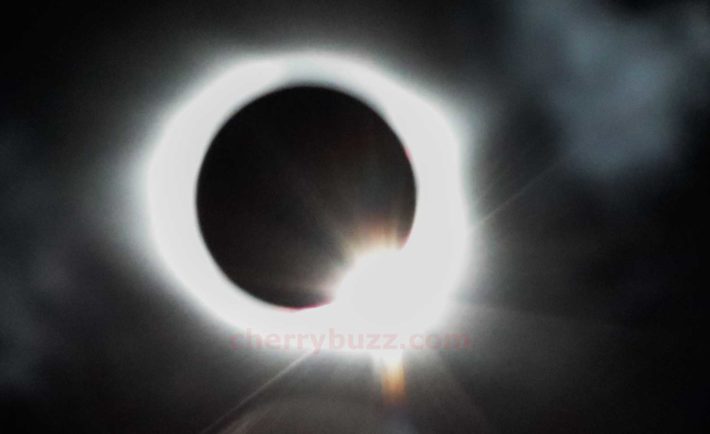
The August 21st Total Sun Eclipse
The Eclipse in Ancient Myths
Man’s ingenuity and imaginative capacity are always fascinating and are nowhere more apparent, I think, than in ancient myths and folklore surrounding eclipses, solar as well as lunar!.
The lack of a scientific explanation was more than compensated for with ingenuously elaborate stories and since life activities, in ancient times, revolved mostly around simple issues as eating, eclipses were said to show celestial bodies being ‘eaten’ or having a chunk bitten off them. Monsters: a celestial dragon (China), wolves (Northern Europe), fire-dogs (Korea), a giant frog (Vietnam) or yet a bear (Native Americans) took a bite at the sun or moon according to whether it was a solar or a lunar eclipse.
This might well satisfy an ancient people wondering at a partial eclipse but would not satisfactorily explain a total eclipse. Here Indian folklore comes to the fore; the demon, Rahu, having disguised himself as a deity, steals a draft from the elixir of immortality and swallows it. The sun and moon, being witnesses to the act, quickly report it to Vishnu who just as quickly decapitates the demon before the elixir passes through to its body. Therefore the decapitated head became immortal while the body was not. In revenge the immortal demon-head swallows the sun or moon (total eclipse) but having no extension beyond the head means the swallowed sun or moon soon re-emerges intact. Revealing as these stories are, I think the African story of celestial bodies in mortal conflict and the need for humans, on earth, to patch up their quarrels and end all conflicts to effect a similar happy denouement in the sky is both touching and instructive.
Such ancient myths have left a diffuse emotional residue in modern man’s psyche. In spite of all our scientific and technological advance, some still fear eclipses and believe them to be portents or omens of doom and destruction. Fiza Pirani has probably hit the nail on the head when she traces the word ‘eclipse’ to its emotionally charged origin in the Greek language meaning ‘abandonment’. The sun was seen as literally ‘abandoning’ earth and leaving everything and everybody in the dark. Something akin to that sense of abandonment felt by humanity in its infancy seems to have remained in the genes and some people still today, in the 21 century, feel unease about eclipses. Especially so on behalf apparently of pregnant women and their unborn babies as well as very young children. F. Pirani traces this superstition, which is still alive today, to the Aztecs! It is with pleasure that one sees that Italy struck an independent note in ancient times in believing that flowers planted during eclipses grow brighter and more colorful than those planted at other times.

The American August 21st, 2017 total solar eclipse
Leaving these ancient myths aside, the American August 21st, 2017 total solar eclipse was truly the event of a lifetime for scientists, astronomers and ordinary citizens alike. It was “the first [total eclipse] to grace continental United States since 1979 (and the first to go coast-to-coast since 1918)”, as Christopher Crockett states in his delightfully informative article. He quotes the astronomer, Jay Pasachoff, a veteran eclipse-chaser having seen 33 total eclipses and 30 partial ones, on the immense impact of seeing a total eclipse on the human psyche with people cheering or crying from sheer excitement. The reason behind such great excitement is that although a few telescopes in space see some of the sun’s corona all the time, where the corona meets the sun’s surface is masked by the sun’s intensity. “Only on days of eclipses can we put together a complete view of the sun” according to Pasachoff.
The excitement about the exact moment when the moon’s shadow touches down “in the north Pacific Ocean that was given as 16:48:33 UT*, at local sunrise”. And at that spot “the sun will actually rise while totally eclipsed. This is a sight few people. From then on the moon’s shadow will race at full speed till it encounters US main land before it crosses from coast to coast. The swath of the shadow will touch the United States for only 1h 33m 16s – less than the length of a short movie! But in that time, many, many people in our country will have had their perceptions, and their lives, changed forever.

The 2017 Eclipse & Science
Several scientific activities were planned for the eclipse. NASA scientists were hoping that this total solar eclipse will help them determine the correct size of the sun.
Others researchers at Montana State University in Bozeman planned launching Over a 100 weather balloons at various parts along the path of totality to measure changes in temperature and wind speed etc. They are expected to soar to a height of roughly 30 km.
An exclusive four hours “2017 Total Solar Eclipse MegaCast” by NASA provided coverage of the path of totality as announced on (eclipse2017.nasa.gov). It allowed NASA to interact with the scientists and members of the public across the country as they all watch and study the eclipse. The MegaCast will be picked up by NASA TV as well as other national and local TV stations. Thus hundreds of millions of viewers worldwide will be able to experience this once-in-a-lifetime event and will learn about it through NASA programming.

The August 21st Eclipse & Business
In conclusion, it is pertinent to note that this was also a big business opportunity with thousands of travelers flying from all over the world and unless people book with tour operators specializing in this field, some might end up with no accommodation. The good side was: there are tour operators for all pockets, from posh five-star hotels to camp-sites. The main attraction will undoubtedly be the solar eclipse but intelligent tour operators will combine that with visits to spectacular beauty spots and scenic forest or mountain walks. (www.eclipsetours.com). The business aspects of the event include also innumerable books and atlases not only on the great American eclipse of 2017 but on past and future ones. One example is the Thousand Year Canon of Solar Eclipses: 1501 to 2500 by Fred Espenak. There are also collections of cartoons on sale, such as Eclipse Nuts by Bill Kramer, the web master of www.eclipse-chasers.comwho is himself an avid eclipse chaser. Some of those cartoons can be viewed on line at: https://www.eclipse-chasers.com/eclipseNuts. There is already a kids’ Solar Eclipse 2017 Dinosaur T-shirt advertised on amazon.com. There are solar eclipse video games, TV episodes and programs; name it, you’ll most probably find it! Perhaps the only thing missing from this huge 2017 Solar Eclipse activity is a Solar Eclipse Cake or Solar Eclipse Vegan Kebabs! But who knows; some creative chef might yet surprise us with his/her culinary inventiveness.

Choosing Spot to Watch the Eclipse
We based our choice on the duration of the total eclipse and the weather forecast and it was a memorable day. The picture we are posting were taken at the Bicentennial Capitol Mall in Nashville, Tennessee, USA. It was as predicted to be one of several good spots to watch August 21st total sun eclipse for one minute 55 second. Except for few minutes of passing clouds, August 21st was a sunny day at the Bicentennial Capitol Mall park.

A Memorable Day in the Bicentennial Capitol Mall in Nashville, TN
The Bicentennial Capitol Mall is a magnificent 19-acre park that gives the visitor a taste of Nashville, TN history as well. The state of Tennessee listed several other good spots for watching the total sun eclipse on that day. Everything was well prepared for the expected crowd of the event attendees.
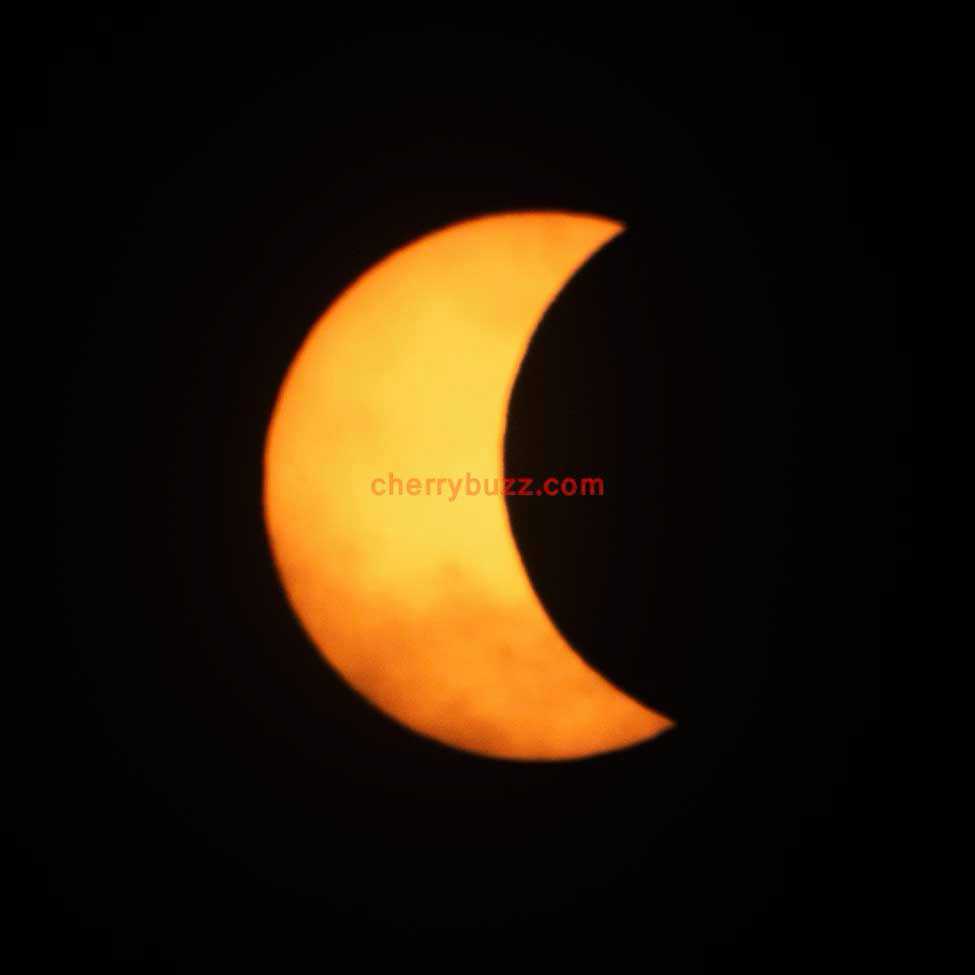
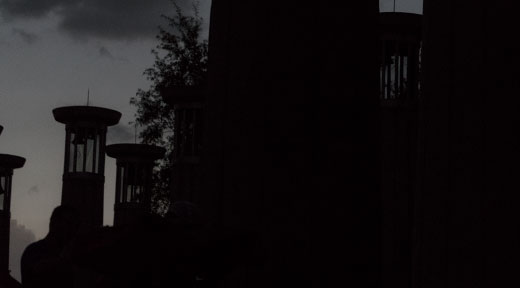
 On August 21st, the Bicentennial Capitol Mall was the spot for a fun day in the sun with all types of food, crafts, arts and activities for kids. Several music bands were playing music as part of celebrating the sun eclipse that all the attendees enjoyed. It was indeed a chance to experience one of the rarest celestial phenomenons in lifetime in one of the prettiest destinations in the South. During the total sun eclipse, it changed from full sun shine to darkness as seen in the photos we are posting for the park and park ranger.
During the total sun eclipse unforgettable moments, the attendees were cheering, screaming of joy or even crying. We managed to photograph the sun’s corona and the different stages of the eclipse on that day. We will be posting more photos. For more information about the eclipse and the Bicentennial Capitol Mall please see the links below.
- https://www.timeanddate.com/eclipsws
- Jane J. Lee, in https:www.news.nationalgeographic.com/2013/11
- www.bt.com>news>science
- Quartz Media LLC (Article by: Ephrat Livni, June 28, 2017)
- www.ajc.com (Fiza Pirani – The Atlanta Journal-Constitution / Sat, July 22, 2017 Filed in National/World News)
- www.Eclipse2017.com
- www.Space.com
- www.scienceneqs.org/article/astronomy/eclipse 2017
- www.eclipse2017.nasa.gov
- www.bt.com>news>science
- www.chasers.com
- New Scientist: July 29, 2017
- Quartz Media LLC
- www.Eclipsetours.com
- http://tnstateparks.com/parks/about/bicentennial-mall
- https://en.wikipedia.org/wiki/Bicentennial_Capitol_Mall_State_Park
- http://tnstateparks.com/activities/solar-eclipse-at-the-park-2017
-
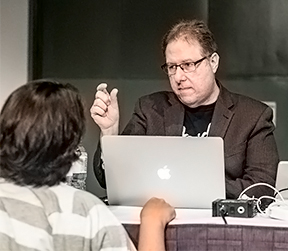
Lightroom On Tour 2017 in Los Angeles with Scott Kelby
Although it is indeed true that practice makes perfect, who in to-day’s fast moving world can afford the time to wait for that perfection that beckons at the far-off end of the practice tunnel?! The answer is bound to be an emphatic ‘No one’.
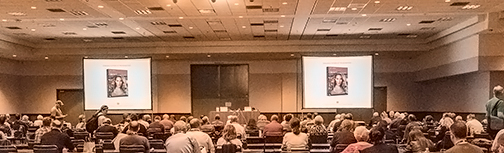
Training at the hand of the best and most accomplished practitioners of any art is the sure way to getting the optimum tips possible in the shortest of time span. A day’s seminar can encapsulate and offer you, on a golden plate, the fruits of years of experience and experimentation from highest-caliber experts saving you not only tons of time and money but also the numerous possible pitfalls and disappointments strewn along that above mentioned ‘practice tunnel’. This was exactly what awaited all those professionals and amateur photographers attending the one-day seminar: Lightroom On Tour 2017, with Scott Kelby – Los Angeles, California on Monday, August 14, 2017.


It is a single-day’s seminar; but what a day! Replete with amazing tips on Lightroom and Photoshop techniques and shortcuts that will ensure you that wow-effect that your images deserve. There were tips on how to organize your work in the best of practical ways and on how to unlock the full potential of Photoshop and Lightroom. The segments about tethering and making videos in lightroom were amazing. It was a day to cherish and remember.
Cherrybuzz.com invites all readers to share their experience with all Mr Kelby’s training products: online courses, books, different articles in the famous Photoshop User or Lightroom Magazines that they might have explored at https://kelbyone.com.
For the first time in Mr Kelby’s tours & seminars, he was delighted to see that one of the attendee proposed to his fiancé. Once the proposal was accepted the couple were clapped and cheered by all and, as a special gift, were awarded passes to the upcoming Photoshop World in Orlando, Florida.
We included several links for our readers for further information.
- https://kelbyone.com
- https://scottkelby.com/gear/
- http://kelbytv.com/
- https://scottkelby.com/tether-camera-ipad/
- https://en.wikipedia.org/wiki/Scott_Kelby