Your cart is currently empty!
Author: Editor
-
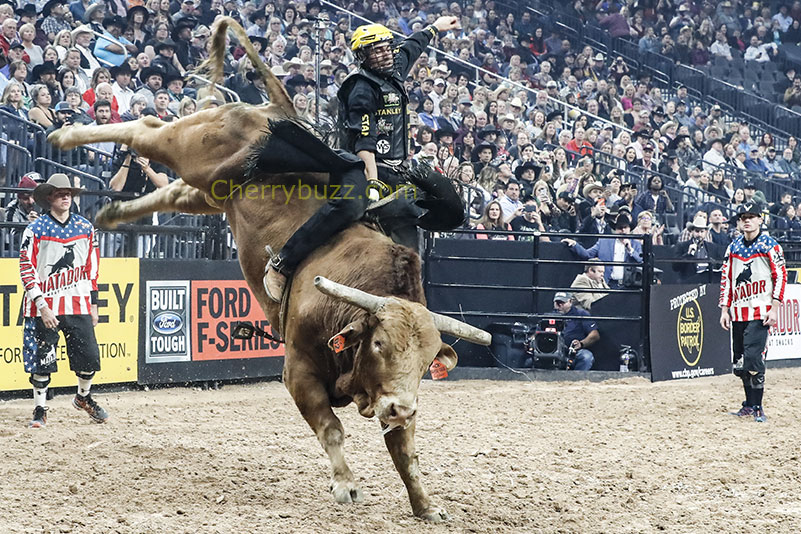
2018 PBR World Finals November 10th/Day4
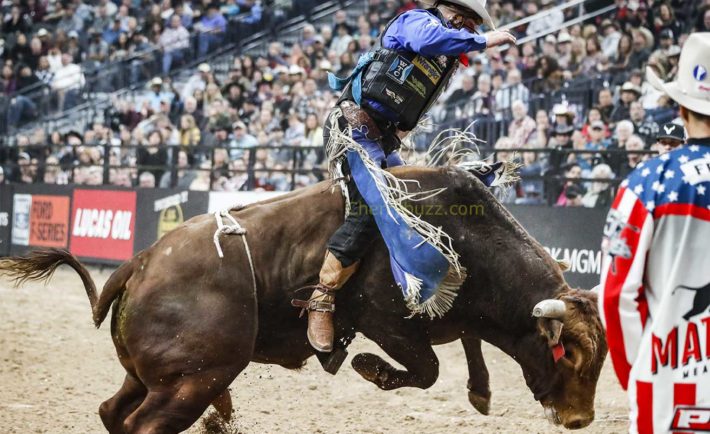
On day 4 of the 2018 PBR World champion, we continue sharing the photos of the memorable moments of the thrilling event.
Because of the risk of severe injury in this riskiest of sports, riders are required to wear a padded vest to reduce pain and possible injury. They also wear chaps made usually of leather to protect their legs and thighs. The cowboy hat is still the most favored by adult professional bull-riders but helmets are increasingly seen as offering better head safety. A younger competitor which is to say those under the age of 18 have to wear a helmet as well as an ice hockey style face mask. The bull rope is fitted with a braided handle in the middle for grip and bull riders wear leather gloves to protect against rope burn. Cowboy boots with loosely locked spurs are also part of a rider’s outfit. As for the bull, all that is required is the flank strap which is made of soft cotton rope 5/8″ in diameter and which is intended to encourage the bull to use its hind legs in vigorous bucking.


-

2018 PBR World Finals November 9th/Day 3
The 2018 PBR World Finals contests in Las Vegas have been full of breathtaking and hair-raising moments as the riders tenaciously held on to the fiercely bucking bulls! On Day 3 of the 2018 World Final , we have captured those memorable moments on camera and we share them with you.


-

2018 PBR World Finals November 8th/Day 2
In our article last year, “2017 PBR World Finals”, we commented at length on the immense appeal and increasing excitement of this sport which pits highly trained athletes’ wits, mental alertness and agility versus the sheer brute force of the bulls! Its fan base has continued to grow over the years and now counts millions upon millions not only in the two Americas but all over the world. Those who can, travel across the globe to watch the contest in situ while those unable to take the journey watch the contests on the screen. CBS Sports Network and other networks around the globe broadcast PBR contests. PBR televised broadcast viewers are now estimated at half a billion households. In February of this year (2018), a new digital network called RidePass adds hundreds of hours of bull riding and other western sports to anytime availability. It is a fitting addition to to-day’s digital world especially since PBR turned 25 this year! Happy 25th anniversary!.


 It is a well-known fact that the ride lasts a mere eight (8) seconds but these are adrenaline-filled seconds like no other. Some animal activist groups think it a cruel sport but actually the riders are more likely to suffer injuries than the bulls. Bulls are money and that ensures that they are well looked after by their owners. Likewise, the athletes know well that it is paramount for them to have a good ride; it means thousands or millions of dollars in their pockets while a bad ride or a fall gets them next to nothing. Yet for most champions the most highly prized reward is to have their name listed in the Ring of Honour, similar to a hall of fame induction, and the $20,000 gold belt buckle.

 2018 PBR World Finals contests in Las Vegas have been full if breathtaking and hair-raising moments as the riders tenaciously held on to the fiercely bucking bulls! We have captured those memorable moments on camera and will share them with you. On the second day of the contests, we are glad to report that all the champions left the arena on their feet. At the end of the second day, the 2008 World Champion, Guilherme Marchi (36 years old) announced that with 16 years’ experience of professional bull riding, he was looking forward to the next stage in his career: coaching and training aspiring bull riders in his native Brazil. Meanwhile, J. B. Mauney confirmed the close friendship between those two champions adding that professional bull-riding camaraderie was more like a family bond than competition.
As always happens at this type of sports events, there is more to sample, experience and purchase by way of memento or souvenir. Thus there is PBR Finals Week Western Gift Expo, besides music and song with Vanessa Legrand, and great food and drink specials. All in all, the 2018 PBR World Finals is indeed a most exhilarating sports event offering maximum excitement and a rare chance to meet and mix with some of the best champions in the field.
For more details, please see the following links:
www.ridepass.com
https://en.m.wikipedia.org/wiki/professiobal_Bull_Riders
2017 PBR Media Guide, PBR & Bull Riding Basics -

The Monster Truck Nationals “Night of Destruction”
“Night of Destruction” at Lucas Oil Speedway
If you have never in your life seen a Monster Truck competition, then the October 20th, 2018 event was a MUST! Indeed, “Wheatland, MO Roared and Rumbled with the nation’s most competitive MONSTER TRUCKS as they stormed into The Lucas Oil Speedway (per www.lucasoilspeedway.com earlier statement). The show featured seven famous Monster Trucks – Bigfoot, Overkill Evolution, Black Stallion, Storm Damage, Hurricane Force, Overbored and Miss Overbored. The show included incredible, high jumping, ground pounding, car crushing race and then went completely insane with amazing freestyle action. The Monster Truck Nationals “Night of Destruction” is the USA most competitive and was indeed a fitting grand finale of the Lucas Oil Speedway season. And, as if this was not temptation enough, early birds, on the day, met the drivers, took photos with them and their amazing trucks at the pre-event Autograph Pit Party on the track. Apart from enjoying the actual event, visitors, young & old, had a chance to get a ride on a real Monster Truck during the Pit Party, the Intermission and at the end of the show.


Monster Trucks
A monster truck is a pickup truck modified with a larger suspension and larger tires for recreational and sports uses. But not any pickup truck can enter a competition. To take part in a racing event, a monster truck must meet specific guidelines. It must be 12 feet tall, 12 feet wide, and from 2015 onwards should be equipped with specifically made 462 lb BKT 66-inch off-road tires. Monster trucks competing at an event are equipped also with a remote ‘kill switch’ which track officials can trigger to shut down a truck’s engine to stop it if endangering the safety of the spectators or the driver. The height above ground of monster trucks made them ideal for rescuing people in flooded areas, as happened in Texas in August 2017 after Hurricane Harvey.


A monster truck tire weighs between 800-900 lbs and, when multiplied by four, takes up about a third of the truck’s average 10,000 lbs weight! The minimum weight of a monster truck is 9,000 lbs while some weigh as much as 12,500 lbs! On the 20th of October, Lucas Oil Speedway had more than 70,000 lbs of Monster Truck Thunder! The average cost of a monster truck tire is $ 2,600 while an average monster truck costs $ 150,000! A Monster Truck driver can make $ 25,000-50,000 per year but naturally that can rise considerably with fame. Some monster truck drivers who are still participating in competitions as well as some who have retired offer coaching and training to fans who aspire to join in the fun. Thus there are monster truck ‘schools’ with ‘student trainees’ from all over the world!.


Lucas Oil Speedway
Lucas Oil Speedway is located at Highways 83 and 54 in Wheatland, Missouri, USA. It is considered by industry insiders to be one of the top 5 race tracks in the USA; it has also been referred to as “The Diamond of Dirt Tracks”.
It was originally built in 2001 by Ron and Jenkins of Wheatland and was named simply Wheatland Raceway. But Lucas Oil bought it in 2004, re-built and re-opened it as Lucas Oil Speedway in 2006 with new visitor, VIP, and competitor and track facilities. Later “Lake Lucas” an artificial lake was added for drag boats and motorboat racing. This addition, which is the world’s first artificial lake for drag boat racing, was opened in 2011. This is in addition to a scenic campground with spots for RV camping with onsite shower house, water, electric hookups, fishing ponds and hiking trails. Then the construction of an off-road supercross-motorcross-style track was started in 2016 and completed with inaugural events in 2017. The track hosts off-road dirt buggy racing and is the only one of its king in southwest Missouri.


Most Popular Driver
Besides, motorsports fans, whether attending the events or watching them on the screen (on CBS Sports and MAVTV Motorsports Network) were invited to vote, on line at (https://www.lucasoilinvite.com/speedway-2018) for their “Most Popular Driver”. This year’s banquet is set for Nov. 3, 2018 where the top ten drivers, in each of the four divisions, will be honored & the Forrest Lucas Lifetime Achievement Award will be presented. What is perhaps almost unbelievable, though definitely true, is that the event included a National Monster Truck Spectacular performed by kids aged 6-17!.

Forrest & Charlotte Lucas
We’ll bring our article to a close with an interesting brief story about the persons behind the whole venture. Lucas Oil Products Inc. is now a world leader of High Performance Lubricants and Problem Solving Additives. But it all began when a truck driver started experimenting with oil additives to benefit his business. This truck driver is Forrest Lucas and this is how the company came to be founded in 1989 by Forrest and Charlotte Lucas. Their ambition, backed by hard work and dedication, paid off in assured success. And besides oil products and racing, they are passionate about their ranch in Cross Timbers, Missouri & a new organization, Protect the Harvest. Another example of their successful diversification is their acquiring of the cable network MAVTV. The awesome Monster Truck Nationals photos need no comment; they tell their own story!.


For more information, please review the following links:
http://www.lucasoilspeedway.com/guest-info/camping-lodging
http://www.lucasoilspeedway.com/track-info/lake-lucas
http://www.lucasoildragboats.com/
https://en.m.wikipedia.org/wiki/Lucas_Oil_Speedway
https://monstertruck.wikia.com/wiki
(https://en.m.wikipedia.org/wiki/Monster_truck)
https://www.lucascattlecompany.com
https://www.protectthe harvest.com
https://www.lucasoilinvite.com/speedway-2018
-
The 34th Annual Norco Mounted Posse PRCA Rodeo
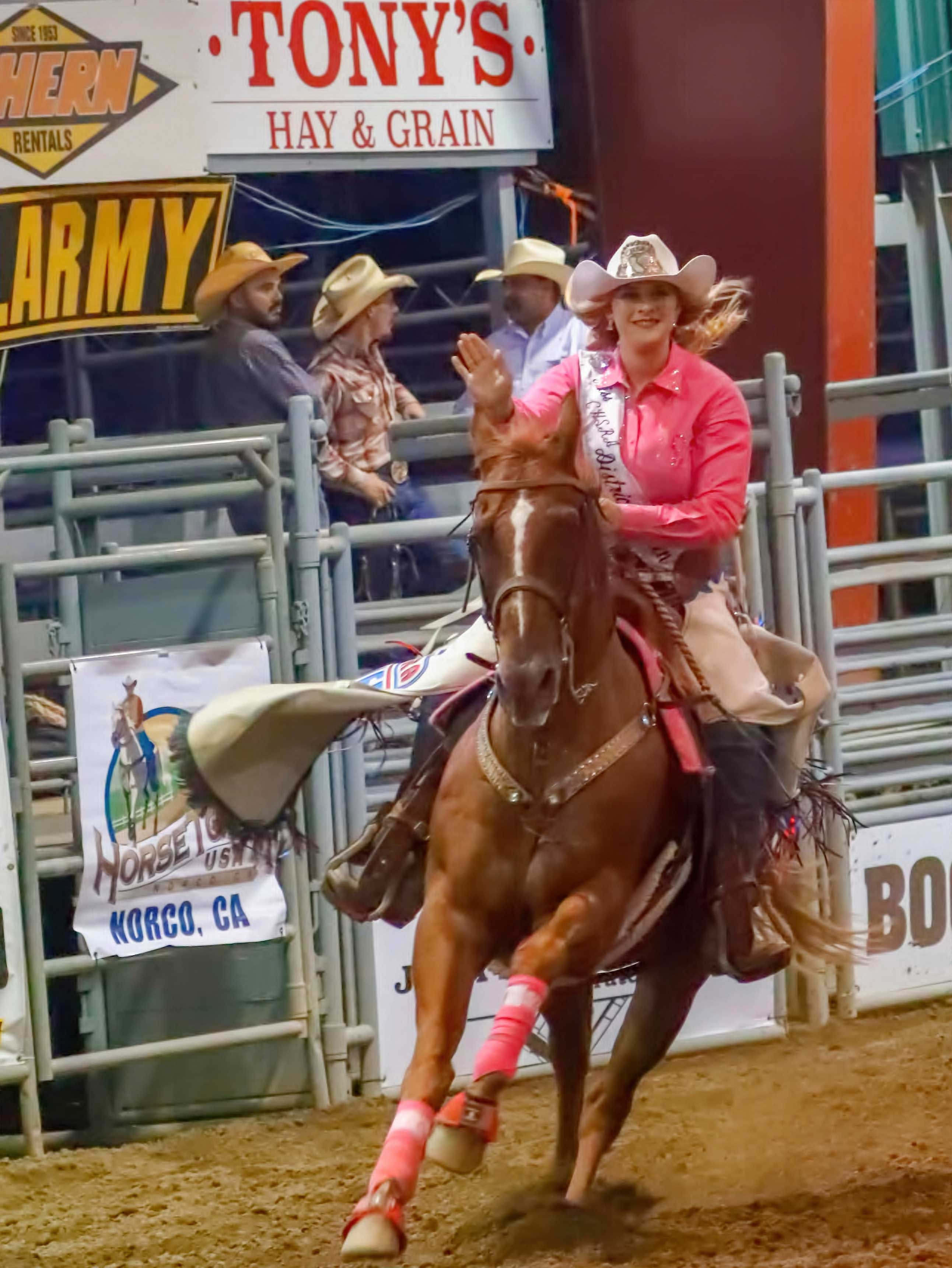
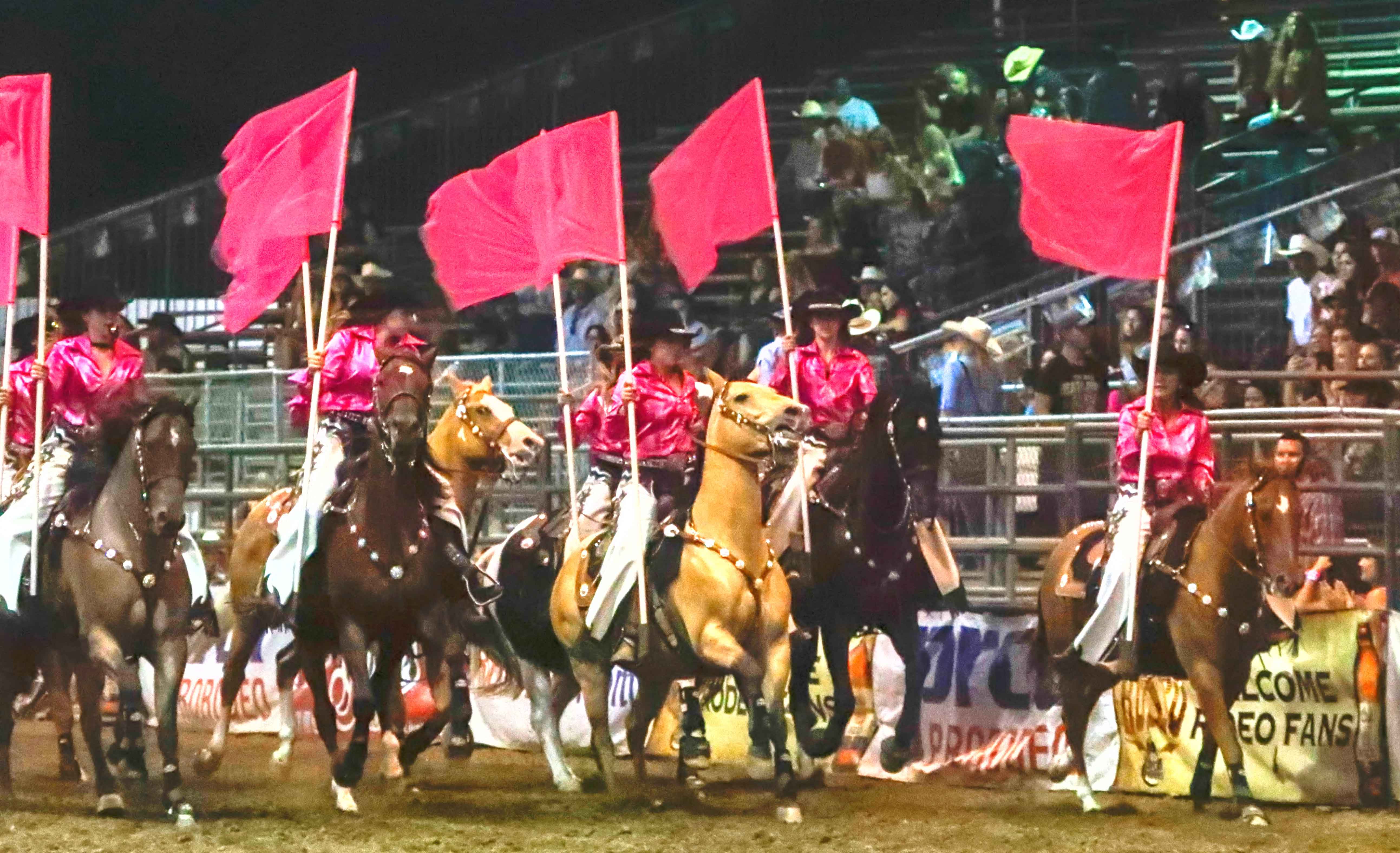
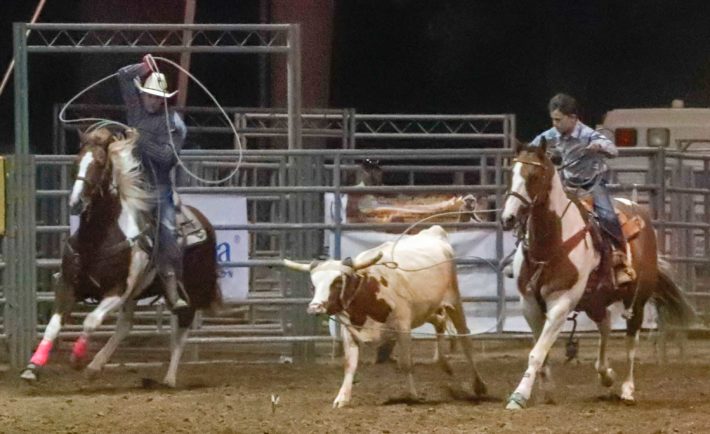
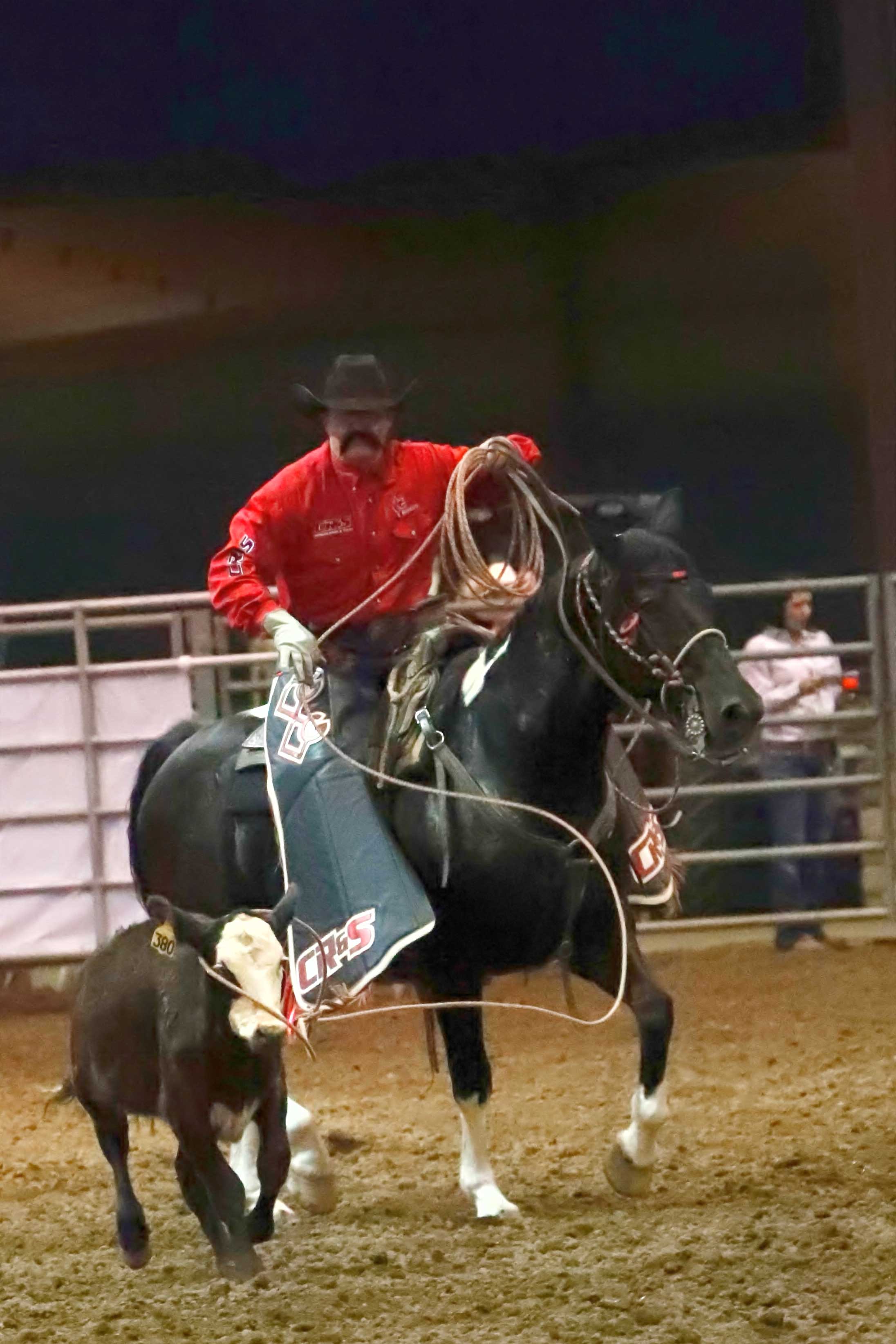
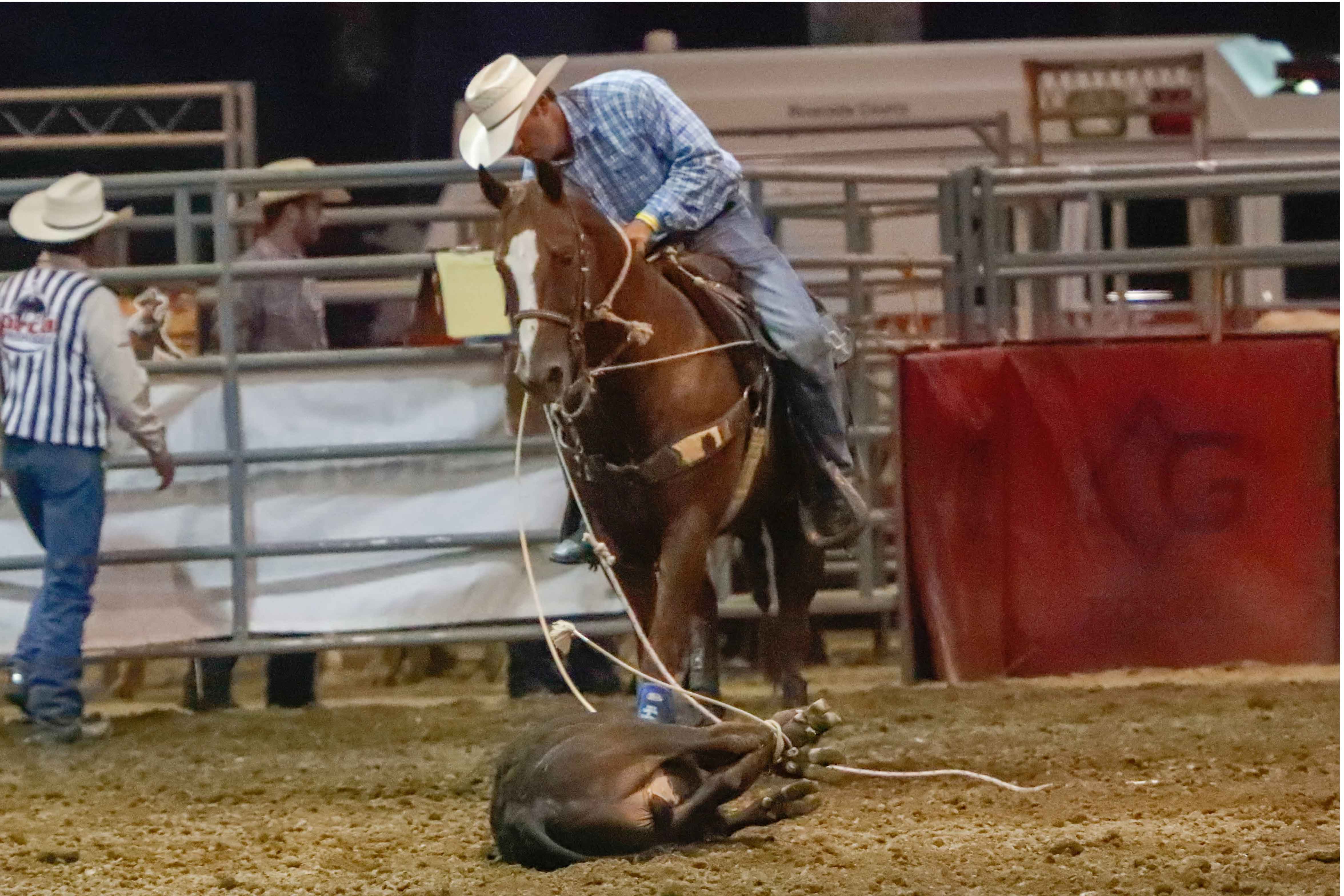
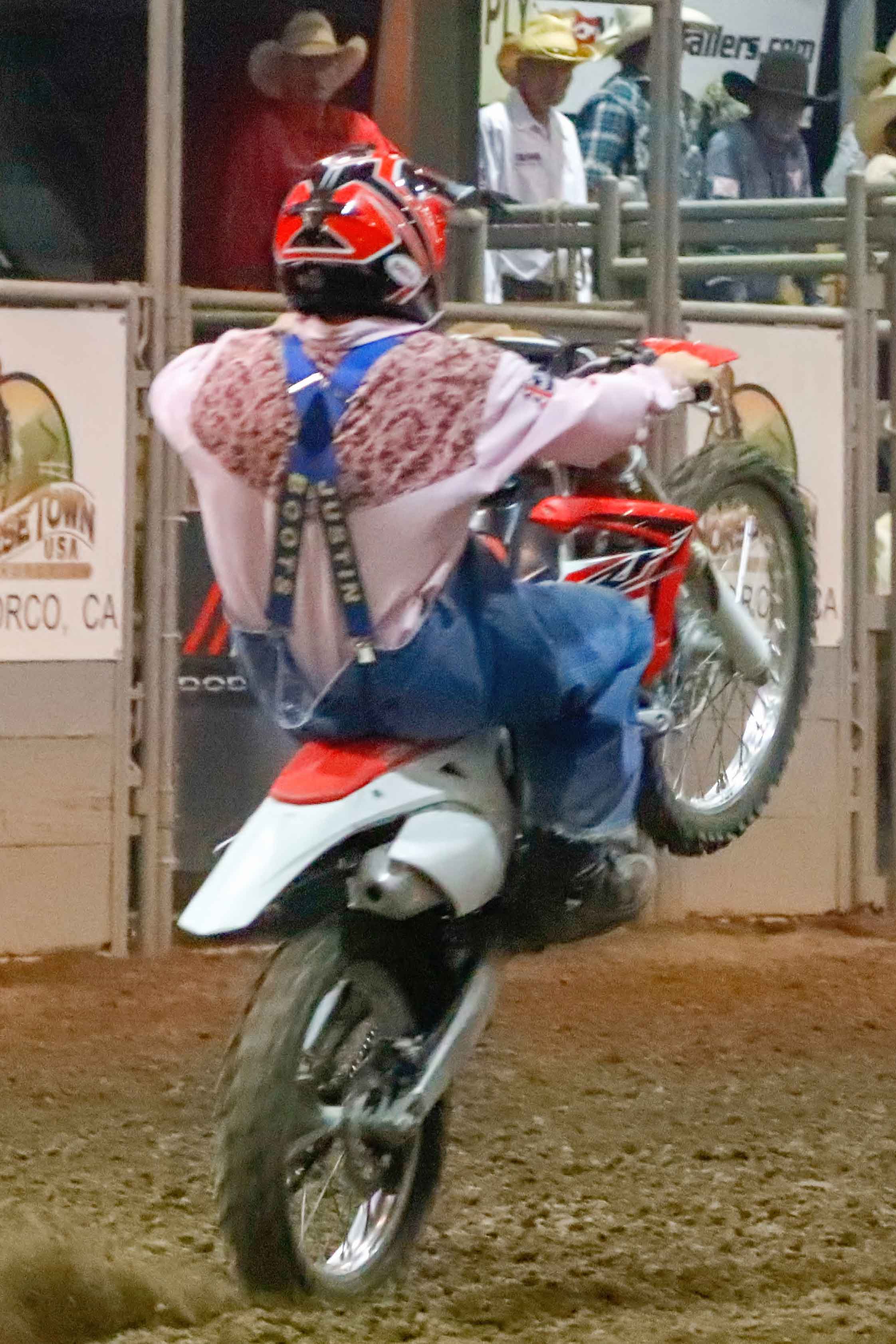
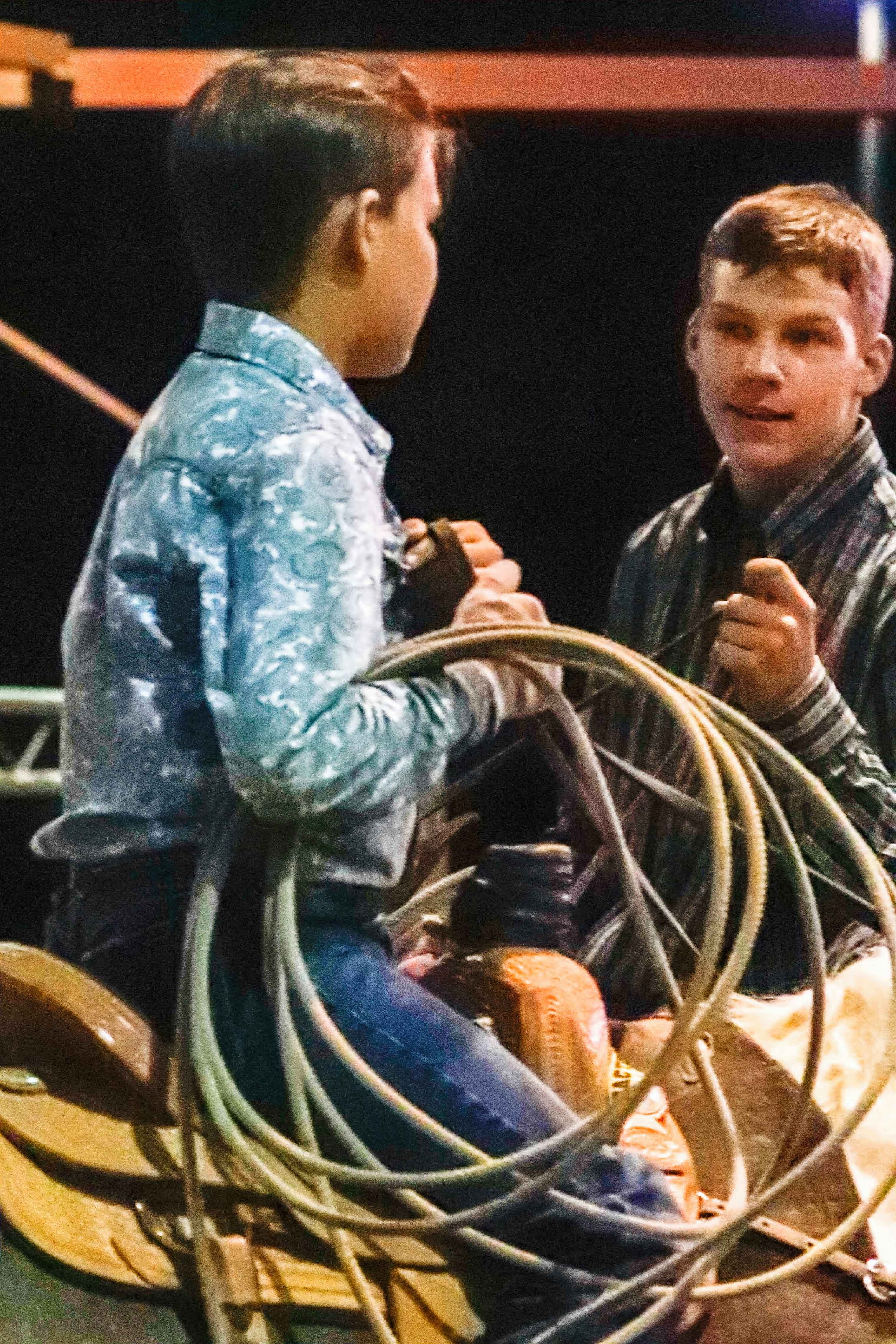
Norco, in Riverside County, California, is an American town with a difference. The town’s motto is “Horse Town USA” and this is exactly what makes it different. Instead of sidewalks you have horse trails and you ride to town and tie up your horse at corrals and hitching rails! When the city was founded, its ordinances actually dictated that its architecture should reflect a Western theme which is equestrian oriented. Norco’s Mounted Posse force was founded in 1964 to provide law enforcement services on horseback. From that date up to now, the force patrols the town’s horse trails and provides events security besides taking part in parades and arranging a popular rodeo every summer. On August 17-19, Norco, celebrated the 34th Annual Norco Mounted Posse PRCA Rodeo. The event took place at the George Ingalls Equestrian Event Center. This is a major event for the Professional Rodeo Cowboys Association (PRCA) celebrating California’s Wild West roots. The Rodeo included barrel racing while offering the chance to sample great food, listen to superb music and, for the energetic, the chance to dance all night.
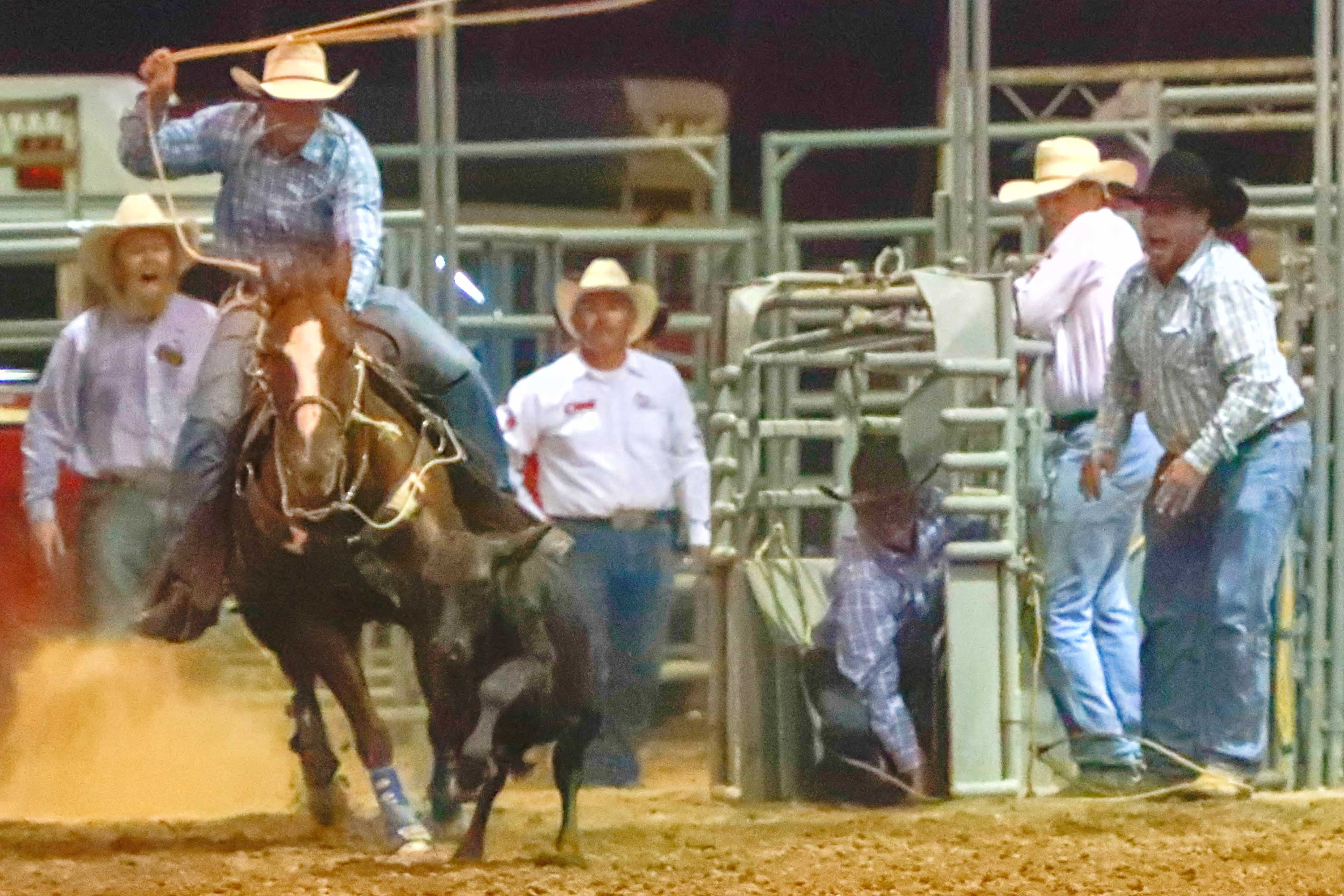
It was a well-organized family event full of fun activities suited to all ages. We will share with you some of the photos that were captured the event.



-

King Tutankhamun , The Nine Year Old Pharo
‘A nine year old king’ sounds like the stuff of a fairy tale yet it is no fairy tale! King Tutankhamun who ruled Egypt thirty three centuries ago was the son of King Amenhotep IV (better known as Akhenaten) & grand-son of King Amenhotep III. He came to the throne of Egypt at nine years of age! Just as Tut’s father, Akhenaten, had deserted his own father’s religion of many deities & upheld one deity, Aten the sun disk, young King Tut ended his father’s one deity practices, destroying its monuments & artistic manifestations, & returned to the numerous deities of his grandfathers. The young king did not live long though; some think he died at age 15 or 16 while others put it at 19 years of age. Modern DNA research & other state of the art technologies are increasingly revealing more about his life and death. But enough is already known anyway about his short reign, his half-sister-wife Ankhesenamun (Nefertiti’s daughter) & their off-spring (two still-born daughters whose fetuses were found in Tut’s tomb).

Howard Carter’s discovery of Tut’s tomb in the Valley of the Kings, officially known as The Great and Majestic Necropolis of the Millions of Years of the Pharaoh, Life, Strength, Health in the West of Thebes, outside modern Luxor, is itself fantastic in its ups and downs and has captivated the world’s imagination alike with its facts as with its rumors of Pharaoh’s curse and other lore which kept the cinema industry going for decades.

November 4th, 1922 was the day Carter found the staircase which led to King Tut’s tomb. Although the antechamber has clearly been tampered with by robbers, Carter’s description of his first glimpse of its contents is still stunning. At first, he could see nothing in the light of the candle he inserted through a hole drilled in the door, but as his eyes “grew accustomed to the light, details of the room emerged slowly from the mist, strange animals, statues, and gold — everywhere the glint of gold”. The actual burial chamber was opened in February 1923. This is where Carter found a series of gold sarcophagi at the heart of which lay the mummy of young king Tut with his solid gold funerary mask on his face & chest and gold sandals on his feet. There was yet another smaller room which contained the “greatest treasures of the tomb”; both of these chambers have fortunately escaped grave robbers for 3,000 years!

If having one’s name and life-story kept up in people’s minds and hearts renders one immortal, then young King Tut “is pretty spry for a guy who is more than 3,000 years old”, as Jesse Baker said in 2011. One might think that it is an indisputable fact that the young Pharaoh (with his treasure) has travelled more extensively after his death than in his life time! Only till one discovers that King Tut’s real remains have never left Egypt; what goes on display is an exact life-size 3-D replica made possible by CT scans. Nevertheless, it is the most widely archeological/artistic travelling exhibition from ancient Egypt. From the 1960s onwards, King Tut has so far visited the UK, Soviet Union, United States, Canada, Japan, France, Switzerland, and Germany etc. The last time an exhibition of King Tut’s treasures toured the US was not so long ago. Tutankhamun and the Golden Age of the Pharaohs exhibition started in Los Angeles County Museum of Art in June 16 to November 15, 2005. It then toured 18 cities in the US before leaving for Australia in January 2011.

A popular Egyptian saying claims that whoever drinks of the waters of the Nile is bound to return for more! It seems one can assert the same for the waters of North American rivers. King Tut is indeed back in Los Angeles. “King Tut: Treasures of the Golden Pharaoh” is at California’s Science Centre from March, 2018 onwards for ten months with extended summer visiting hours.

This exhibition is the result of the collaboration of Egypt’s Ministry of Antiquities, Exhibitions International, IMG, and the California Science Center. Mostafa Waziry, the ministry’s secretary general, is on record saying, “To celebrate the 100th year anniversary of the discovery of the tomb of the boy king, Tutankhamun, as a part if the celebration, Egypt is sending 150 masterpieces to tour all over the world”. Among those 150 artifacts and antiquities are sixty which are on display for the very first time outside of Egypt. “Some stories are everlasting, and that is the case with the legend of King Tut,” said President of Exhibitions International, John Norman who also produced Tutankhamun’s earlier exhibitions. “For this new exhibition, we have curated an extraordinary collection of treasures from King Tut’s tomb and given this historical discovery a timely new dimension. Visitors will be truly immersed in a modern presentation like no other”.

The pleasure of California Science Center President, Jeff Rudolph, is evident in his assertion, “We are pleased to host the world premiere of ‘King Tut: Treasure of the Golden Pharaoh’ “. He added further, “Its ornate artifacts and multimedia displays will stimulate interest in the many sciences related to archaeology”.
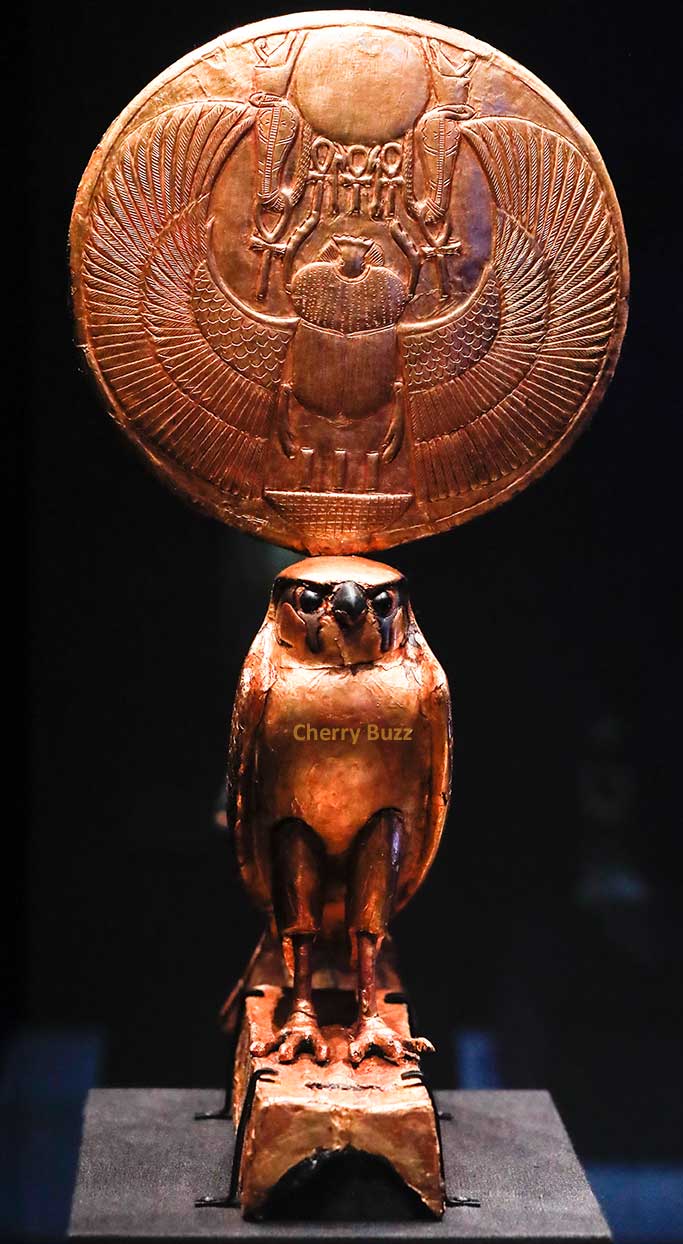
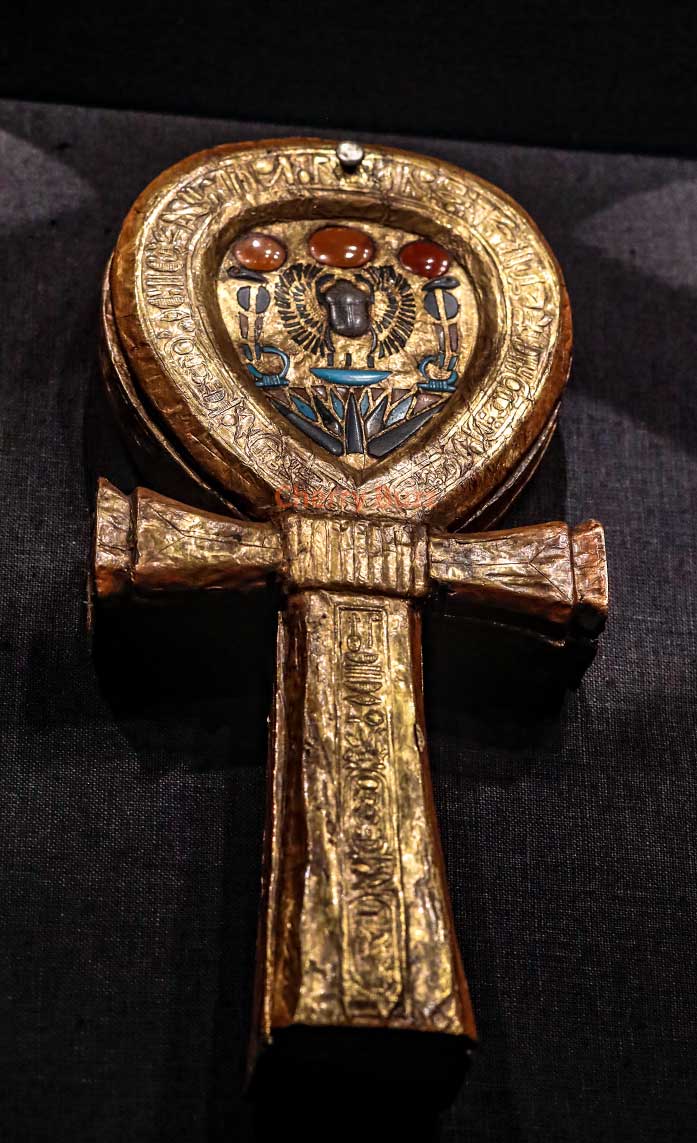
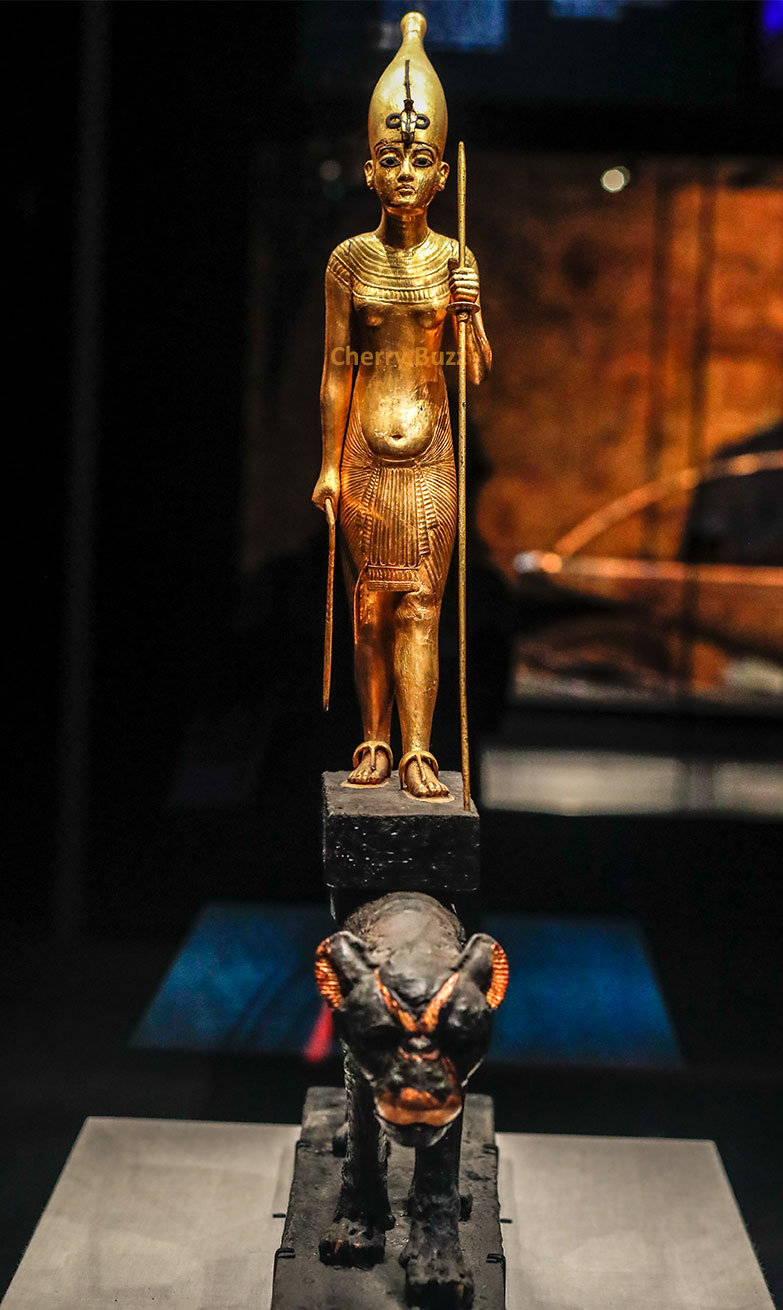
The exhibition is a truly memorable experience which enables the visitor to trace the boy King’s journey from death to the after-life and explains the significance of each artifact interred with him. Thus there is, for example, a statue denoting the pharaoh’s resurrection at dawn, an exquisite wooden shrine with scenes of Tutankhamun and his wife Ankhesenamun giving a rare glimpse of the daily life of a royal household and a jeweled caffinette which held the King’s mummified liver with the goddess Isis depicted on each lid for protection. The exhibition features “nine distinct experiential galleries and an array of 3D visuals, digital content, 360-degree theatrical manifestations, custom soundscapes and more in an engaging, audio-guided tour”.
It is indeed a new experience altogether where dazzling multimedia enhances rare artifacts in ways never achieved before, taking us, the exhibition visitors, on an immersive journey of Tut’s quest for immortality. We were able to see and get in-depth information on the exquisite rings found on Tut’s fingers, the opulent jewelry that adorned his body, and those gold sandals which we have mentioned before. It is definitely a once-in-a-lifetime chance also to discover how the CT & DNA analysis of Tut’s 3,300 year old mummy together with other cutting-edge technologies have revealed new information about the boy king’s health , lineage and possible cause of death.

Zahi Hawass, the well-known archaeologist shares the same vision about the boy King’s exhibition. On August 11th “A night at the museum with Dr. Zahi Hawass” event at the California Science Center, Dr. Hawass is due to present the latest updates on his excavations in the Valley of the Kings. Then he will hold a private exhibition viewing of the KING TUT.

Last but by no means least, the boy king is clearly still looking after his interests and those of his people. If earlier tours of US cities benefited Egypt little financially, as Mark Lach, senior vice president for Arts and Exhibitions International, the organization which negotiated Tut’s return to the US, this is not the case this time around. When the boy king and his treasures go home this time, there will be also about $80 million to take back to Egypt. He is thus raising funds for Egypt, partially to preserve pharaonic temples and monuments but primarily to help the construction of ‘The Grand Egyptian Museum’ which will be his final resting place.

For further information about King Tut, you may consider the following links:
https://www.nationalgeographic.com/archaeology-and-history/magazine/2018/03-04/findingkingtutstomb
https://interactive.wttw.com/remembering-chicago/tutmania-field-museum
https://www.neh.gov/humanities/2015/septemberoctober, vol. 36, Number 5
https:// nationalgeographic.com
https://www.npr.org/2011/01/13/132743793/king-tutankhamens-farewell-tour
https://californiasciencecenter.org/exhibits/king-tut-treasures-of-the-pharaoh
https://www.eventbrite.com/e/a-night-at-the-museum-with-dr-zahi-hawass-tickets-47166098069
https://californiasciencecenter.org/Press-room/Press-releases/king-tut-treasure
https://foxla.com/entertainment/features/king-tut-treasures
https://www.nationalgeographic.com/archaeology-and-history/magazine/2018/03-04/findingkingtutstomb
https://interactive.Wttw.com/remembering-Chicago/tut mania-field-Museum -

Technology & Butterflies
 Butterflies are such stunningly beautiful and delicate creatures that they are sometimes used as a point of reference denoting beauty, colorfulness & the ephemeral. It is a less known fact to many butterfly lovers that some species of those delicate colorful winged creatures, the North American Monarch for example, actually migrate up to 4830 miles (7,778 km) to overwintering sites in Mexico!. Such migratory feats are rare in insects except perhaps for desert locusts (Schistocera gregaria) which have been on record (notably in 1950) as making the journey from the Arabian peninsula over 3,106 miles (5,000 km) to the west coast of Africa in seven weeks!. One tagged monarch in Lincoln, Nebraska, was recovered in Paulina, Iowa, after having covered 158 miles in 18 days!.

But apart from their beauty and delicateness, what is marvelous & intriguing about butterflies is the shimmering iridescence of the colors on their wings. The vibrant colors also change in intensity depending on the butterfly’s movement and the angle of viewing. This is because that shimmering color is not due to pigments but to tiny three-dimensional structures which cause the way light is reflected to change. Sarah Knapton, the Telegraph science correspondent, wrote about a scientific break-through which Professor Andrew Parker of the Natural Museum in London reported upon. The shimmering colors, said the Professor, ” are not caused by pigments or dyes but materials with a Nano-structure. And they last for a long time. We have dug up 49 million year old beetles and they are still the same color that they were when they died”. The article goes on to assert that Prof Parker & colleagues successfully cultured, in the Natural Museum Laboratory, an entire blue morpho butterfly forewing from cells dissected from the chrysalis.

The implications of discovering colors that never fade are enormous not only for the construction industry but for textile, the automobile & numerous other industries. Research might have gone on for years at a slow pace but one technological innovation gave scientists a mighty helping hand. This is the Crisper-Cas gene editing technique; it has enabled researchers to find out exactly what a gene does by deleting it & observing what happens or by giving it a twist & again observing the results. The great expense and elaborate steps of earlier gene editing procedures were prohibitive but Crisper is a fairly easy & relatively inexpensive tool empowering researchers in utterly new ways. Hence the leaps & bounds that research, in this area, has shown in recent years. Thus we see in a report in The Proceedings of National Academy of Sciences that two teams of biologists have used the technique to explore two master genes which control the ways in which butterfly wings appear to us. The master genes in question are those called optix & WntA. Research on these two master genes has not only rendered results for understanding butterfly wings but has also revealed that master genes that control the activity of other genes can evolve different roles in different species. The experiments & research continue with huge implications as well as hopes of finding answers to key questions in evolutionary biology.

As noted before, the economic & industrial implications of these researches are immense & wide-ranging. From an artist’s tool, as in the case of Kate Nichols, this gave rise to a scientific ambition to make Nano-structural materials that would give bright shimmering iridescent colors which not only do not fade but also are water resistant like butterfly wings. The next step was realized by a research group at Pennsylvania University. The research group succeeded, as far back as 3012, in making a new material which might also contribute in the future to energy-saving devices that automatically adjust the heaters and air conditioners inside smart buildings. On the outside of a building, such materials will not only provide bright, iridescent colors pleasurable to the eye but will also cancel the need for ever needing to re-paint the building or even clean it since structural colors also resist dirt, damp & mildew. It is pertinent to note that although the surface of structural materials or paints is rough, that roughness is not detected by the touch because the component structures are minuscule. The group was successful in giving their material the ridges necessary for structural color as well as the roughness necessary for water proofing; it only remains to make the processes less expensive & as that achievement has been made in 2012, future smart homes are now probably around the corner.Kate Nichols, an artist who has been using Nanoparticles in her paintings for years, traces the inception of her art back to her fascination with the blue-green iridescent hues of the Morpho butterfly. Because the color is not made of pigments but of structures which are smaller than a single wavelength of light, they “redirect and slow light waves down, causing them to interfere with each other in ways that depend on the shape, size, and spacing of the scattering structures, as well as on the angle of the incoming light and the position of the observer. In the case of the Morpho, these structures scatter blue light most strongly; its hue shimmers and shifts to lighter or darker blue as the butterfly moves, producing iridescence. Structural color is also at work in peacock feathers, fish scales, and beetle casing. Morpho butterflies and peacock feathers have also been behind the invention of new color printing techniques by researchers at the Technology University of Denmark. As this technology uses high resolution of 127,000 dots per inch, it can be used to print security patterns or watermarks on passports or bank notes which would make it impossible to counterfeit.

For more information, you may visit the following links:
https://en.wikipedia.org/wiki/Butterfly
http://www.pressreader.com/uk/the-daily-telegraph/20160827/281672549367295
https://www.nytimes.com/2017/09/18/science/butterfly-wing-color-patterns-gene-editing.html
https://www.katenicholsstudio.com/
https://gizmodo.com/this-artist-paints-with-nanoparticles-inspired-by-but-1746583925
http://blog.drupa.com/en/butterfly-wings-and-bird-feathers-inspire-new-color-printing-technique-2/
-

BODY WORLDS: Pulse Exhibition at the California Science Center
The History of California Science Center
A visit to the California Science Center, at Exposition Park, Los Angeles, is at once amazing and breathtaking as well as highly enlightening for children and adults alike. That part of Los Angeles has gone through one transformation after another from the days when, from 1872 to 1910, the site held open agricultural fairs till the California State Exhibition building was erected in 1912. In those early days, the building displayed agricultural and industrial products. But it was in 1951 that it became the California Museum of Science and Industry. Then in the late 1980’s an ambitious 25-year plan was devised for a much larger facility to be renamed the California Science Center. The Northridge Earthquake of 1994, which damaged the building, put a keener impetus on the plan and the building was closed in 1996.
The first phase of the plan was completed and the Center was opened in 1998. New wings and extensions have been accomplished and now the California Science Center not only has galleries with exhibits on continuing loan from NASA and the Smithsonian Institution, it also boasts a seven-storey IMAX screen and the Wallis Annenberg Building for Science Learning and the K-5 Science Center School officially known as Dr. Theodore T. Alexander Jr. Science Center School. The California Science Center, the largest hands-on facility on the West Coast, is jointly owned and run publicly and privately by the State of California and the California Science Center Foundation.
BODY WORLDS: Pulse Exhibition
The California Science Center is currently hosting “BODY WORLDS: Pulse” which the Center’s official site calls “the largest Body Worlds exhibition in a decade, with new real human-body specimens”. More than 200 specimens are on display through 20 February, 2018. Adults and children are welcome but parents are advised to read the family guide provided before deciding whether or not to take their children along.

Plastination Technique
Body Worlds exhibitions encapsulate the vision and life-work of Dr. Gunther von Hagens who invented the technique of plastination in 1977 and patented it in the following year. Plastination allows the preservation of animal and humans organs and whole cadavers indefinitely. It has caused much controversy in different parts of the world not only in Germany where von Hagens has been, for 22 years, a lecturer in the Institute of Anatomy and Pathology of the University of Heidelberg. His name at birth was Gunther Gerhard Liebchen, von Hagens being the name of his first wife, the mother of his three children. His second wife, Angelina Whaley, is the Creative Director of the Body Worlds exhibitions. When the exhibition was in London, in 2002, a Guardian newspaper article, in describing The Horseman, which presents a flayed man with open skull holding his brain in one hand and a whip in the other sitting astride a flayed horse, compared the exhibits to the works of Salvador Dali.

Dr. von Hagens in the Media
Dr. von Hagens has been attacked and vilified by numerous individuals and cultural bodies and often in offensive terms. He has been called all sorts of names including Dr. Death, a modern Frankenstein and lots more, his exhibits dubbed ghoulish, shocking and in bad taste. But Dr. Gunther von Hagens not only welcomed controversy, he reveled in it as evidence of his argument that modern humans, especially in the west, lived in denial of their corporeality and of death. He told the Guardian reporter, Stuart Jeffries, that he wanted to “democratize anatomy”, adding that the sight of “cholesterol-crammed aortas, diseased lungs and booze-swollen livers … may well have benefits in terms of public health”. In truth, the Body Worlds exhibitions present Herculean scientific feats made possible only with von Hagens’ discovery of plastination and the dogged determination that devised equipment to make it possible to plastinate whole animal and human cadavers, all of which willingly donated by the living before dying. In 2011, von Hagens revealed that he was suffering from Parkinson’s disease and that, after his death, his cadaver will be plastinated and put on display. His wife and three children are also on the register as donors destined for plastination after death. Plastination is not by any means an easy task; it needs up to 1,500 work hours at a cost of about £25.000 per cadaver and sometimes more. But a Body Worlds exhibition is yet more than a huge learning experience; it is also an aesthetic and creative one as the cadavers are presented in life-like poses reflecting more than a revelation of various structures and systems of animal or human anatomy. Moreover, Dr. Gunther von Hagens’ Institute of Plastination has for decades been supplying medical colleges the world over with whole plastinated cadavers for teaching purposes and also with another of his inventions: wafer-thin slices of plastinated organs and body parts for more refined studies of diseases in the search for new cures.

As always, major human discoveries and achievements attract enormous media attention and Dr. Gunther von Havens is no exception. With the black fedora hat which is always on his head even when he dissects a cadaver, no doubt in imitation of the hat in The Anatomy Lesson of Dr. Nicholas Tulp by Rembrandt, now housed in the Mauritshuis Museum in The Hague, the Netherlands, von Hagens has cut a remarkable figure on various TV and radio programs and has even appeared briefly in a Bond movie. The 2006 Casino Royale supposedly shows a Body Worlds exhibition taking place in Miami and von Hagens can be seen, fedora hat and all, leading a tour of the exhibition. The actual location was not Miami though but the Ministry of Transportation in Prague!.
Body Worlds Exhibits
The aesthetic/creative presentation of the exhibits at a Body Worlds exhibition usually start muted but build up to a crescendo at the end with the highly emotional and tragic plastinated cadaver of an eight-month pregnant woman with her womb open revealing the equally dead and plastinated fetus inside.
There are thousands of registered body donors to the institute of Von Hagen’s institute for Plastination in Heidelberg, Germany who are from different countries over the world including USA. The Plastinarium is a permanent exhibition in Guben, Germany.
In 2004 Body Worlds exhibit in California Science Center was seen by more than a million visitor. The “Body Work” exhibit is till on display until February 20, 2018. So if you have not seen it yet, you still have the chance to see that unique exhibit.

For more information please refer to the following links:
californiasciencecenter.org
www.vonhagens-plastination.com
Wikipedia
The Guardian: Stuart Jeffries: The Guardian: Tuesday 19 March, 2002

-

2017 PBR World Finals
The Start

If you day-dream, dream BIG! This is the lesson PBR leaves you mulling. Twenty bull-riders’ dream, in 1992, costing each $ 1000, has become one of the fastest growing globally televised sports not only in the USA or the two Americas but in the whole world with millions upon millions of USA dollars in prize money. It’s a tough sport when you think that the average weight of the bull-rider is below 160 pounds (usually 159 or often less) while the bull usually weighs 2000 pounds! The ride lasts a mere eight (8) seconds but the risks to the rider are enormous till one remembers that this sport is not about weight nor yet about physical strength but about dexterity and the mental alertness-cum-imagination which allows the rider to foresee the bull’s move and maneuver his response so as to forestall every attempt by the bull to throw the rider off its back. Champion cow-boys’ wit and skill pitted against champion bulls’ brute force encapsulate the immense appeal and excitement inherent in this sport which attracts millions of fan attendees and glues millions more to their television screens.

2017 Competition

The BFTS (Built Ford Tough Series) World Finals in Las Vegas (1-5/11/2017) promised, and delivered, heaps of exciting competitions and lots more. Fans saw and cheered famous bull riders like Derek Kolbaba who at twenty-one years of age has become one of the top ten names in the sport with earnings over $ 306,000. There were many other well-known experienced bull-riders such as Cooper Davis and Kaique Pacheco. These two (Davis and Pacheco) were, unfortunately for them, bucked off in the fifth and final round of the World’s Finals on Sunday. Cooper Davis finished as number three (3) in the 2017 Finals with earnings totaling $280,770.92 while Kaique Pacheco finished as number five (5) with $405,775.15 in earnings. Number two was Derek Kolbaba who made $359,672.32 in earnings. But this year’s number one, the 2017 World Champion is Jess Lockwood with a whopping $1,525,292.90 earning. It is a dazzling achievement for Montana’s young rider who is only twenty years old. He is actually the youngest World Champion in PBR history. Jose Vitor Leme (Ribas do Rio Pardo, Brazil) won the 2017 PBR World Finals and Rookie of the Year with earnings totaling $459,927.

The 2017 Champion Bull
As for the bulls, to be fair one has to admit that they too put a remarkable show of stubbornness, bucking capacity and agility in spite of their colossal weight. Many of the bulls were already well-known worldwide; they too were cheered and admired and though bulls do not see a growth in bank accounts, they eventually get rewarded by being allowed to retire on some pretty stud farm. The 2017 Champion Bull is SweetPro’s Bruiser who has proved himself a champion par excellence, having won the YETI title for the second consecutive year! Congratulations to the Champions, humans and beasts, and the fun and excitement continue with the next rounds of competitions and winners.


It is pertinent here to note that there is more to the BFTS World Finals, in Las Vegas, than bull-riding competitions. Some of the most famous artists in country music and song have always taken part thereby adding an artistic and glamorous dimension to the events. There were many famous stars such as Chase Rice, Aaron Watson and Ryan Weaver. All in all the occasion provided lots of excitement and joy to the fortunate fans attending the event and to the millions watching on the screen all over the world. If you missed the event this year, plan for 2018 World Finals in November, 2018.

-
The 46th Albuquerque International Balloon Fiesta presented by Canon
Balloon History
 The flight of birds in the sky must have fascinated mankind from times immemorial. To ancient civilizations, to be borne high up in the sky has been a dream; Pharaonic Egypt visualized the dream in ‘solar boats’ by means of which Pharaoh’s soul travelled to the Sun for renewal before returning to its mummified body. But the Chinese seem to have been more practical; L. Ege tells of a missionary who seems to have dug out, from archives in Pekin, evidence that the Chinese have solved “the problem of aerial navigation by means of balloons”. It was probably a development from the airborne lanterns which they had used for military signaling. Europe’s first encounter with this phenomenon was at the battle of Legnica (1241) during the Mongol invasion of Poland. But it took almost five centuries before the first small balloon, made of paper filled with hot air, got lifted about 4 meters in front of King John V & the Portuguese court (1709) by the Brazilian-Portuguese priest, Bartolomeo de Gusmao. However, the following decades saw remarkable & fast developments. France played a pioneering role & from August 1783 onwards had numerous hydrogen-filled balloons take to the skies in front of King Louis XVI & Queen Marie Antoinette. Soon Britain & other countries followed suit but modern ballooning proper, as a sport & for recreation &/or tourism, made great strides in the twentieth century after Edward Yost’s invention of the propane burner which changed balloons from gas to hot air. Synthetic materials & lighter burners were instrumental in that development.
  Live but non-human creatures were the first passengers in the history of balloon flights. Thus in September 1783, the Montgolfier brothers, in France, sent a sheep, a duck & a cockerel on a flight which covered 2 miles in 8 minutes before landing safely to the delight of all on board!. In the UK in 1784, the Italian diplomat Vincenzo Lunardi launched his balloon at London’s Artillery Ground with “a dog, a cat and a caged pigeon”; his flight covered twenty-four miles, taking him and his passengers into Hertfordshire. In 1821, Charles Green claimed to have taken his horse with him in a successful balloon flight but as this was disputed, he repeated the flight in 1850 with a small pony on board. In August 1852, however, there was a big outcry when Madame Poitevin took off from Cremorne Gardens in London as “Europa on a bull” putting flesh on the legend of the abduction of Europa by Zeus disguised as a bull. The sight of the nervous bull dressed up as Zeus was the cause of the outcry & a charge of animal cruelty was filed causing a diplomatic tiff & henceforth animals lost their passenger seats.
 The history of ballooning offers many interesting stories, some downright hilarious and some heart-breakingly tragic. Of the first is the incident of how the first Robert brothers’ balloon took off from where the Eiffel Tower now is, in Paris, & after a 45 minute flight it landed in the village of Gonesse where the horrified peasants attacked this weird invader from the sky with pitch-forks and whatever else they could lay hands on and destroyed it before the chasers on horseback could dispel the fear & save the unfortunate balloon.
  IN 1785, the French aeronaut Blanchard and the American John Jeffries crossed the English Channel in a balloon for the first time. In 1870 balloons were used “for military observation during Franco-Prussian War and a French Minister made a dramatic James Bond escape from a besieged Paris by balloon”. During World War II, a large number of balloons were inflated over the city of London to obstruct air attacks during the battle of Britain. Hydrogen balloons were also used in upper-atmosphere research.
 Balloon Fiesta
 Rather than this signaling the demise of ballooning, it gave a new impetus to individuals to compete in increasingly daring feats. Ballooning fiestas started to be held in many parts of the world and in 1973 the first Balloon World Championship was held in the USA. The famous International Gordon Bennett Cup had already been established in 1906 but was interrupted twice by the two World Wars to be resumed in 1979 although it was not officially reinstated by the Federation Aeronautique Internationale (FAI) till 1983. The Austrian pilot, Josef Starkbaum, won the trophy seven times between 1985 and 1993.
 This daring sport has continued to attract numerous individuals who compete to go further, higher or to stay airborne longer. Thus in 1978, three American businessmen, Ben Abruzzo, Max L. Anderson and Larry Newman, crossed the Atlantic for the first time in 137 hours and 6 minutes. Less than a decade later, this record was beaten when, in 1987, Sir Richard Branson and Per Linstrand made the Atlantic crossing in 33 hours! This time the balloon, the Virgin Atlantic Flyer, was by far “the largest balloon ever”, measuring 2.3 million cubic feet, and reaching a speed of more than 130 miles per hour (209 k/ph). In 1991, the same duo made the first transpacific crossing breaking all existing records and reaching speeds of up to 245 miles per hour (349.28928 km/ ph).
 Most amazing was perhaps the first round the world helium/hot air balloon flight by Bertrand Piccard and Brian Jones in 1999. It took them 19 days, 21 hours and 55 minutes. This record was beaten, in 2002, by American millionaire Steve Fossett’s solo flight round the world in 13 days. This record remained unbeaten till 2016, when “the Russian adventurer (and priest!) Fedor Konyukhov made his solo balloon flight around the world in just under 11 days”.
  Virgin Balloon Flights made headlined and a new Guinness World Record with a rock concert; “the song ‘What I did to-day’ was performed and recorded 1,848 m (6,063 ft) above Wiltshire”! Then in 2008, the same company, Virgin Balloon Flights, teamed up with Virgin Radio and Sony BMG and made what is believed to be “the first ever show by a hit artist [Newton Faulkner] to be recorded in a hot air balloon” above the Swiss Alps. The largest mass balloon ascent took place at the Lorraine Mondial fiesta in France in 2011 where a total of 329 balloons lined up to launch thereby setting a record. That year, Kenneth Karlstrom beat 120 top notch pilots and won the prestigious event’s target flying competition.
 Nowadays, lovers of ballooning fiestas are spoilt for choice; they abound in USA, Canada, Britain and various parts of Europe.
2017 Albuquerque International Balloon Fiesta
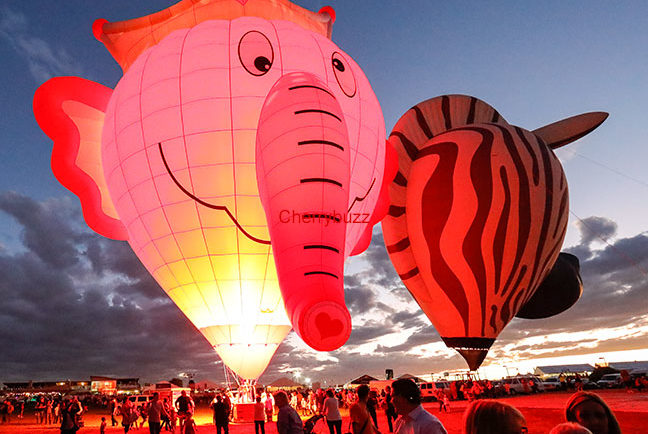
This month’s Albuquerque International Balloon Fiesta was the 46th time that this premier international ballooning event has filled Albuquerque’s crystal clear skies. It’s a nine-day event with more than 500 balloons taking part, thereby making it the largest hot air balloon festival in the whole world. It was held in Albuquerque for the first time in 1972 and has continued to be held there annually ever since. A combination of perfect October climate and the ‘Albuquerque Box’ make it ideally suited for the festival. The ‘Albuquerque Box’ refers to the geographic landscape as well as to predictable wind patterns, both of which allow the balloonists to control and even re-trace their course & go round as many times as they need to in certain on-field target competitions such as the “Key Grab”. At this event, balloonists strive to grab prizes, including the keys of a brand new vehicle from the top of tall flexible poles, hence the name. The number of balloonists taking part grew year on year till it peaked at 1,019 in 2000. Then the Balloon Fiesta Board limited the number to 750 starting 2001 in a bid for “quality over quantity”. But in 2009, that limit was brought down again to 600 due to the growth of the city and a loss of landing zones. In all, the location extends over 360 acre, with 100 acres of grass and booth selling. These booths are well-stocked with gifts and souvenirs as well as local and international cuisine. It is estimated that about 100,000 American & over-seas spectators attend the Fiesta which is no doubt a major attraction but actually the city has lots more on offer for all ages. For those interested in history, there is no better place where to see ancient Indian and Spanish cultures come to life as they explore the Old Town with its old churches, quaint shops, winding brick paths and Adobe benches.
 For those interested in the arts, there is the New Mexico s and Crafts Fair. For more energetic visitors, there is “biking in the Sandia Mountains, hiking among dormant volcanoes, horseback riding along the river” and enjoying the stunning views of the city from Sandia Peak Aerial Tramway.
 There was so much promise of fun packed into this year’s festival. The program was replete with the usual ballooning activities and competitions, such as mass ascent and Key Grab, but it also had laser and firework shows. There was even a kids’ day, Thursday the 12th of October. It was a glorious, fun-filled and unforgettable nine-day break.
One more thing that needs pointing out & is worthy of the highest praise was the way in which Albuquerque’s local authorities, including the Sheriff, the Police Department with the festival’s Board and proud volunteers, had achieved a most successful, smooth running of all the activities in a hassle-free orderly manner. The volume of traffic alone, starting every day at 4 am, was a daunting task and yet it all went smoothly like clock-work and thanks to those officials and volunteers, everyone who attended the festival enjoyed every minute of it. It was indeed an exquisitely beautiful and colorful festival and an unforgettable experience.
The Albuquerque Balloon Fiesta’s official Sponsor, Canon, had a balloon and a tent offering free professional cleaning services of all Canon cameras and lenses used by the festival attendees. It was doubtlessly an excellent and welcome gesture by a top notch company which many took advantage of. Not many know, perhaps, that a regular balloon costs between $35-45k and takes approximately six (6) weeks to make. Fancy special shape balloons are bound to cost more. On October 14, some balloonists decided not to fly after all because of concerns over the possible landing spots after having detected a change in the wind direction that morning.
 One notable change from past balloon flights is that balloon-chasers now follow the flight of the balloon not on horse-backs but in cars into which the balloon is gathered and carried away after a successful landing.
The event provided a huge opportunity to kite-lovers, young and old, who could be seen flying their colorful kites in the afternoon before Night Glow events.We are planning on publishing more photos for 2017 Albuquerque Balloon Fiesta. For more information please see the following links:
https://en.wikipedia.org/wiki/Fran%C3%A7ois_Laurent_d%27Arlandes
www.virginballoonflights.co.uk
The Telegraph newspaper in an article by Nick Squired, dated Dec 6, 2002
www.balloonfiesta.com www.cabq.go
www.vusitalbuquerque.irg
www.tripadvisor.co.uk